Introduction
Starting a business is often driven by innovation, ambition, and speed. Founders focus on building products, acquiring customers, and securing funding. In this fast-moving environment, legal considerations are frequently treated as secondary priorities. Unfortunately, this is also when many of the most serious legal risks begin to take shape.
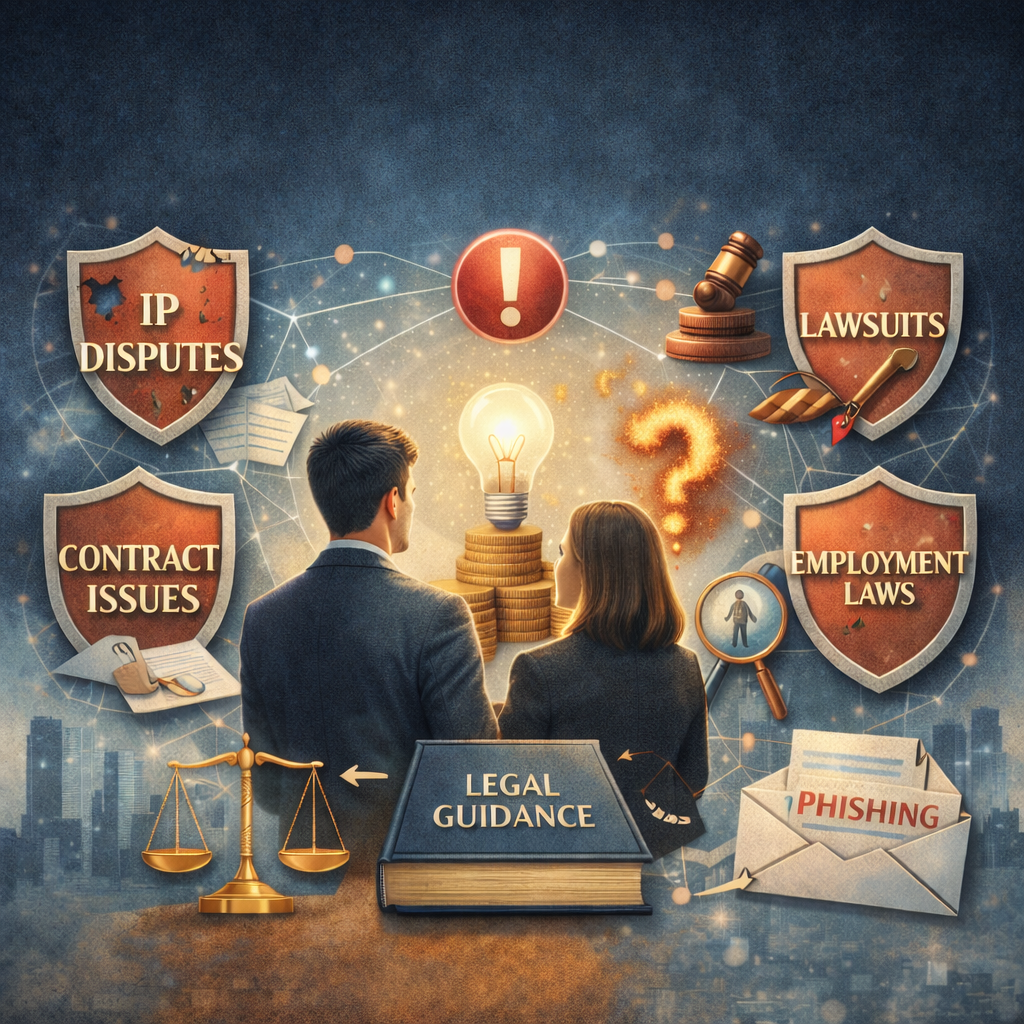
Startups face a unique set of legal challenges. Limited resources, evolving business models, informal processes, and rapid decision-making can expose young companies to risks that are not immediately visible. What appears manageable in the early stages can later develop into costly disputes, compliance failures, or structural problems that hinder growth.
This article examines the key legal risks commonly faced by startups, explains why these risks arise, and outlines practical ways to manage them effectively. Understanding these risks early allows founders to build a stronger legal foundation and scale their businesses with greater confidence and stability.
dvanced settings.
Understanding Legal Risk in the Startup Context
Legal risk refers to the potential for loss, disruption, or liability arising from failure to comply with laws, contractual obligations, or governance standards. For startups, legal risk is often amplified by uncertainty, experimentation, and rapid change.
Unlike established businesses, startups typically operate without mature systems or formalized processes. Decisions are made quickly, documentation may be minimal, and roles often overlap. While this flexibility enables innovation, it also increases exposure to legal risk if not managed carefully.
Importantly, legal risk for startups rarely arises from deliberate misconduct. More often, it results from oversight, assumptions, or lack of awareness.
Foundational Legal Risks at the Incorporation Stage
Many long-term legal problems originate at the very beginning of a startup’s journey.
Improper Business Structure
Choosing an unsuitable legal structure can create lasting complications. The structure affects taxation, compliance obligations, fundraising, ownership rights, and personal liability of founders.
An inappropriate structure may restrict scalability, discourage investors, or require complex restructuring later, often at a higher cost.
Inadequate Founders’ Agreements
Many startups begin without formal agreements between founders. While trust may exist initially, lack of clarity can lead to disputes over equity, roles, decision-making authority, and exit rights as the business evolves.
Founders’ disagreements are among the most common causes of early-stage startup failure.
Equity and Shareholding Issues
Poorly planned equity allocation can create dilution concerns, misaligned incentives, and governance challenges. Informal or verbal arrangements often lead to disputes during fundraising or exit discussions.
Compliance and Regulatory Risks
Compliance-related risks are among the most common legal challenges faced by startups.
Statutory Compliance Failures
Startups are required to meet various statutory obligations, including filings, disclosures, and registrations. Missing deadlines or filing inaccurately can result in penalties, loss of legal standing, and regulatory scrutiny.
Tax and Financial Compliance Risks
Inadequate tax planning, delayed filings, or misunderstanding tax obligations can lead to liabilities, interest, and enforcement action. These issues often surface during fundraising or audits.
Sector-Specific Regulations
Startups operating in regulated sectors such as fintech, healthcare, education, or technology must comply with additional legal requirements. Failure to understand sector-specific rules can lead to severe consequences, including suspension of operations.
Contractual Risks in Early-Stage Businesses
Contracts play a critical role in defining business relationships, yet startups often underestimate their importance.
Informal Agreements
Relying on emails, messages, or verbal commitments creates ambiguity and weakens enforceability. Informal arrangements frequently become points of dispute.
Poorly Drafted Contracts
Using generic templates or copying contracts without customization can expose startups to unfavorable terms, excessive liability, and unclear obligations.
Unbalanced Commercial Terms
Startups may agree to onerous obligations, strict penalties, or broad indemnities without fully understanding the long-term implications.
Employment and Workforce-Related Risks
Startups often operate with small, flexible teams, but employment-related risks can escalate quickly.
Lack of Employment Documentation
Absence of clear employment contracts can result in disputes regarding compensation, roles, confidentiality, and termination.
Misclassification of Workers
Incorrectly treating employees as consultants or contractors can lead to compliance failures and penalties.
Intellectual Property Created by Employees
Without proper agreements, intellectual property created by employees or contractors may not legally belong to the startup.
Intellectual Property Risks
For many startups, intellectual property (IP) is their most valuable asset.
Unclear IP Ownership
Failure to document IP ownership can result in disputes over who owns core technology, designs, or content.
Inadequate IP Protection
Failing to register or protect IP can result in loss of competitive advantage and difficulty enforcing rights.
Infringement Risks
Startups may unintentionally infringe third-party IP, leading to disputes or claims that disrupt operations.
Investor and Fundraising-Related Risks
Fundraising introduces new legal and governance complexities.
Unclear Investment Terms
Poorly documented investment arrangements can create confusion regarding rights, obligations, and control.
Dilution and Control Issues
Founders may lose control of the company due to poorly structured equity arrangements.
Disclosure Obligations
Failure to disclose material risks or information during fundraising can expose startups to liability.
Governance and Decision-Making Risks
As startups mature, governance structures must evolve.
Lack of Formal Governance
Absence of structured board processes weakens accountability and oversight.
Unclear Authority Structures
Ambiguity in decision-making authority can lead to internal conflict and inefficiency.
Legal Risks Arising From Rapid Scaling
Rapid growth often introduces new legal challenges.
As startups expand operations, onboard large clients, or enter new markets, legal obligations increase. Common risks during scaling include:
- Entering new jurisdictions without understanding local regulations
- Overcommitting contractually to meet growth targets
- Hiring rapidly without updating employment structures
- Operating with outdated internal policies
Aligning legal planning with growth strategy supports sustainable expansion.
Data Protection and Privacy Risks
In a digital economy, data-related legal risks are increasingly significant.
Common risks include:
- Collecting data without proper consent
- Inadequate data security measures
- Sharing data without contractual safeguards
- Absence of privacy policies and controls
Data protection compliance should be addressed early, especially for technology-driven startups.
Regulatory Risks in Cross-Border Operations
Global expansion introduces cross-border legal complexity.
Risks may arise from:
- Foreign exchange and tax compliance
- Employment law variations
- Data localization requirements
- Contract enforceability challenges
Domestic compliance does not automatically translate to international compliance.
Branding, Marketing, and Advertising Risks
Aggressive marketing strategies can create legal exposure.
Common risks include:
- Misleading claims
- Unauthorized use of third-party content
- Trademark infringement
- Non-compliance with advertising regulations
Legal oversight of marketing activities helps prevent disputes and reputational damage.
Legal Risks Related to Third-Party Dependencies
Startups often rely on vendors, consultants, and platforms.
Without proper agreements, risks include:
- Service disruption
- IP ownership disputes
- Data security vulnerabilities
- Unclear liability allocation
Well-drafted third-party contracts reduce dependency risk.
Dispute Risks and Early Conflict Resolution
Disputes may arise between founders, employees, vendors, customers, or investors.
Early resolution is critical. Clear agreements and dispute resolution mechanisms help prevent escalation.
Governance Risks as the Startup Matures
Informal governance may work initially but becomes risky as complexity increases.
Governance risks include:
- Lack of oversight
- Poor documentation
- Weak internal controls
Strong governance supports accountability and strategic clarity.
The Cost of Ignoring Legal Risks
Ignoring legal risks often leads to higher costs later. Legal issues frequently surface during fundraising, due diligence, partnerships, or exit discussions.
Proactive legal planning is significantly more efficient than reactive dispute resolution.
Building Legal Awareness Within Startup Teams
Legal awareness should extend beyond founders.
Training, communication, and accountability help reduce unintentional non-compliance and support ethical decision-making.
Why Preventive Legal Planning Is Especially Important for Startups
Preventive legal planning allows startups to anticipate challenges and structure operations responsibly. It supports flexibility without compromising compliance or long-term value.
Why Legal Risk Management Is a Competitive Advantage
Startups that manage legal risk effectively:
- Attract stronger investors
- Scale more smoothly
- Face fewer disruptions
- Build lasting credibility
Legal readiness becomes a strategic advantage.
Conclusion
Legal risks are an inherent part of the startup journey, but they are manageable with awareness, planning, and discipline. By understanding common legal challenges and adopting a preventive approach, startups can protect their interests and create a strong foundation for growth.
Managing legal risk does not slow innovation. Instead, it ensures that innovation is sustainable, resilient, and prepared for scale. Startups that integrate legal awareness into their strategy are better positioned to succeed in a competitive and regulated business environment.
Contact Our Legal Team
For general information and confidential corporate legal assistance, connect with our legal team.
⚖️ Disclaimer
This article is published for informational purposes only and does not constitute legal advice. Reading this article does not create a lawyer-client relationship.
0 Comments